Take Back Retirement

Episode 82
Getting the Most from Social Security: Smart Strategies for Women with Heather Schreiber
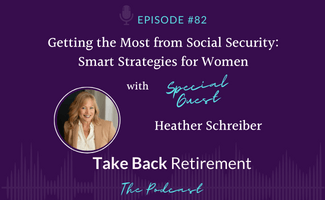
Guest Name: Heather Schreiber
Visit Website: hlsretirementconsulting.com
“People tend to underestimate both how long they’ll live and how long they’ll spend in retirement. That’s something that we really need to be realistic about.” – Heather Schreiber
Have you ever wondered how the labyrinth of Social Security intricacies might be uniquely affecting your retirement plan? Our hosts Stephanie McCullough and Kevin Gaines sit down with Heather Schreiber, a Social Security sage, to dissect the complex world of retirement planning for women. In this episode, the spotlight is on the hidden challenges women face due to career pauses, and how these disruptions can significantly alter the course of their Social Security benefits. They’re not just discussing the issues but also providing the guidance needed to traverse these rocky terrains with confidence.
Navigating the bends and turns of the Social Security benefits calculation can feel like a daunting task. However, armed with knowledge such as how the Primary Insurance Amount (PIA) works, and understanding the bend point formula, women can better position themselves for retirement. Heather explains how the PIA is influenced by a full 35-year earnings record and how earnings-related reductions can be avoided. Whether you’re considering working past retirement age or have already begun receiving benefits, this conversation is packed with insights on how to bolster your retirement income.
But wait, there’s more! Our hosts along with Heather go beyond the basics and enter the realm of survivor and spousal benefits, an area where strategic planning can make a substantial difference. They unravel how the decisions of the higher-earning spouse can have far-reaching effects on survivors and discuss the nuances between survivor and spousal benefits. All of this critical information and more in this episode of Take Back Retirement, brought to you by Sofia Financial and American Financial Management Group.
Resources:
- HLSRetirementConsulting.com
- HLS Retire on YouTube
- HLS Retire on Facebook
- HLS Retire on Instagram
- Movie Clip: The new phonebook is here (The Jerk)
Please listen and share with your friends who are in the same situation!
Key Topics
- Kevin’s Dream Has Come True…Welcome, Dream Guest Heather Schreiber – Social Security Expert (01:30)
- Heather’s Passion for Consumer Advocacy and Reliable Guidance (02:10)
- Women’s Retirement Challenges and Planning Strategies (03:59)
- Social Security Benefits and Earning Limits for Widows/Widowers (06:17)
- Social Security Claiming Strategies (16:45)
- Social Security Spousal Benefits and Filing Strategies (19:16)
- Social Security Divorce Rules (21:58)
- Social Security Cost of Living Adjustments (33:53)
- Retirement Planning and Taxes (36:36)
- Social Security Claiming Strategies for Singles (38:00)
- Stephanie and Kevin’s Wrap-Up (48:33)
[Music Playing]
Stephanie McCullough (00:06):
This is Take Back Retirement, the show that’s redefining retirement for women. Retirement is an old-fashioned cultural concept. We want to reclaim the word so you can make it your own. I’m Stephanie McCullough, financial planner and founder of Sofia Financial, where our mission is to reduce women’s money stress and empower them to make wise holistic decisions so they can get back to living their best lives.
Stephanie McCullough (00:30):
Kevin Gaines is my longtime colleague with deep knowledge in the technical stuff: investments, taxes, retirement plan rules. He’s a little bit nerdy and quantitative, I’m a little bit touchy-feely and qualitative. Together, through conversations and interviews, we aim to give you the information and motivation you need to move forward with confidence. We’re so glad you’re here.
Stephanie McCullough (00:54):
Coming to you semi-live from the beautiful Westlakes Office Park in suburban Philadelphia, this is Stephanie McCullough and Kevin Gaines of Sofia Financial and American Financial Management Group. Say hello, Kevin.
Kevin Gaines (01:05):
Hello, Kevin.
Stephanie McCullough (01:06):
Is it true, Kevin, that today you’re a very excited boy because we have one of your dream guests?
Kevin Gaines (01:13):
So, yes. So, when we started this podcast, I said there’s a couple names I really, really want to get on this show because, well, these are the people that I really geek out with on their particular topics.
Kevin Gaines (01:28):
So today, in my unbiased opinion, we have a treat for you. We have with us Heather Schreiber, who is a social security expert. So, Heather Schreiber, RICP, NSSA has a passion for consumer advocacy that is contagious.
Kevin Gaines (01:45):
She has made it her mission to educate financial and tax professionals as well as the consumers they serve, so that they can more effectively navigate the waters of retirement with confidence.
Kevin Gaines (01:57):
With over 30 years in the financial services industry, Heather believes that education is the key to a successful and empowered retirement. She owns her own boutique consulting firm, HLS Retirement Consulting, LLC in Woodstock, Georgia.
Kevin Gaines (02:14):
She’s an established author and keynote speaker on social security and other retirement income-related topics. She’s been published in the Wall Street Journal, AARP, ThinkAdvisor, InsuranceNewsNet, and Investor’s Business Daily, as well as others.
Kevin Gaines (02:32):
Heather is the author of Social Security Advisor, a companion newsletter to Ed Slott’s IRA Advisor that speaks to the nuances of this critically important retirement income source.
Stephanie McCullough (02:46):
I’m going to tell you Kevin reads every issue of Social Security Advisor newsletter. He gets very excited when they come out.
Kevin Gaines (02:52):
Yeah, Stephanie, you’re not lying. I actually get more excited than Steve Martin in The Jerk when the new phone book arrives.
Stephanie McCullough (02:58):
Without further ado, let’s get into our conversation with Heather. Heather Schreiber, welcome to Take Back Retirement.
Heather Schreiber (03:08):
Thank you, Stephanie. I’m so glad to be here with you today.
Stephanie McCullough (03:11):
Me too. Because this topic of social security and how to make the most of it is really kind of baffling to so many people. It feels like a black box. We used to get these statements in the mail. Now we log in, we see some numbers, and we’re like, “Huh?”
Heather Schreiber (03:27):
Yep. And they change the website design literally it seems like every five seconds. So, I go back so far that I’ve memorized exactly where things are, and then I go the next day and it’s not there anymore. So, it has become challenging at best with all of the changes.
Heather Schreiber (03:43):
Well, and the rules and just navigating the website, navigating your choices, getting help navigating those choices, all of it really imposes a huge challenge for those approaching retirement and ready to make that all important claiming decision.
Kevin Gaines (03:59):
And the other problem in social security is everybody thinks, “Oh, I’m — what age, 65, 66, 67, whatever age they’re claiming. “Oh, It’s just simple. It’s just going to be, I sign up and I start getting a check.” And the moment you start asking two or three questions, all of a sudden, wow, this can get really complicated.
Heather Schreiber (04:19):
It can get complicated. And finding someone that can help answer those questions, social security, they’ve gone through a lot of changes since COVID. Like every business. And so, they, I think, had a lot of turnover after COVID.
Heather Schreiber (04:37):
And so, a lot of those folks are coming in not knowing the history of the rules. And the rules have significantly changed in the last eight years. So, I think, it becomes challenging to A, recognize everything that should go into that claiming decision. But finding someone who can really help you.
Heather Schreiber (04:55):
And here’s the reality. Social security reps are specifically prohibited from engaging anything that looks like advice. They can answer questions, they can take the application, but they can’t go into conversations that are, well, what do you think I should do? Those are off limits.
Heather Schreiber (05:10):
And so, that’s why I am so passionate about helping primarily financial advisors, that’s my clientele. Helping them understand it so that they can better help their clients really take into consideration all the things that are important in their situation so that when they go to make the application, they already are confident in that decision.
Stephanie McCullough (05:33):
And then if we add on top of that, the just systemic challenges that women face in general around working and around retirement, it compounds the issue. Right?
Heather Schreiber (05:44):
Absolutely. I mean, you think about things are changing, obviously, but we’re still dealing with the influx of baby boomers. And so, you see a lot of single-income households. So, what does that do? Well, we know that social security monthly income benefits are based upon your earnings history.
Heather Schreiber (06:03):
And so, women tend to, historically they work in and out of the household. Some worked in the household, they took care of family. So, they are relying on a working spouse for a benefit.
Heather Schreiber (06:16):
Some may have worked, but they may have gone out for a time. I’ll use my own example. I raised children, so I was out sort of consulting on the side, but nevertheless took a step back from my career for a while to raise these little whipper snappers.
Heather Schreiber (06:30):
And then what happens is they leave again, it’s the sandwich generation. We have aging parents. I’m dealing with that right now. So, we tend to have, as women breaks in our work history. And because of that, we have probably lower earnings history over time because we’re not staying with any place for one period of time.
Heather Schreiber (06:51):
We certainly are less likely to have a pension. Now, pensions are going by the wayside unless you’re a government worker of some sort. But these are all challenges.
Heather Schreiber (07:00):
And then the other one, we tend to live longer than you men, Kevin. So, you take all of that together, less savings, an abbreviated or broken work history. So, that equates to a lower social security. We have probably less likelihood to have access to a pension, and we might live longer. We might spend more time in retirement as a solo living on smaller pocket of money.
Heather Schreiber (07:25):
So, all of those things factor into making sure that everyone is educated. But certainly, women really need to understand, hey, how do I go about bolstering my income benefits in the future? What does it mean if I’m single? What do I think about if I’m married? So yeah, lots that we could talk about.
Stephanie McCullough (07:45):
Well, and then as you said, I mean, maybe people are heading towards retirement as a married couple, maybe even a two-earning household, but women often outlive. The average age of widowhood is a lot younger than people think it is.
Heather Schreiber (08:00):
Yeah. So, the U.S. Census Bureau said recently that the average age of widowhood, I’m going to let you guess, it shocked me.
Stephanie McCullough (08:10):
I know the number, but yes, I was surprised too. Kevin, you guess.
Heather Schreiber (08:12):
Well, don’t cheat.
Kevin Gaines (08:14):
Let’s say since it sounds like it’s a low number, let’s go with like 61.
Heather Schreiber (08:21):
Yeah. Well, you’re close. So, it’s 59. I mean, to me 60 is like the new 30. Okay. So, it’s like, what? That’s crazy to me. So, that’s a lot of years. I mean, that could be 30 years in retirement alone.
Stephanie McCullough (08:37):
Easily.
Heather Schreiber (08:38):
And certainly, someone could remarry and all those things, but it’s a long time to spend trying to navigate monthly income planning alone.
Kevin Gaines (08:49):
I mean, and then especially if you become a widow at say 57, 58, there’s, well, what if I get remarried? That create complications or other factors to consider. I’ll phrase it.
Heather Schreiber (09:03):
Right, right. So yeah. So, think about that. If someone dies, let’s say 57, 58 or the survivor’s 57 or 58, they’re in that sort of blackout period for most people because survivor benefits don’t even begin until age 60. So yeah. So, that’s a problem. And the other thing is that remarriage before age 60, do we know what happens with that?
Stephanie McCullough (09:26):
No, I do not know.
Heather Schreiber (09:28):
So, remarriage is-
Kevin Gaines (09:29):
I do.
Heather Schreiber (09:30):
Kevin, you go ahead. You go ahead. Let’s see if you know.
Kevin Gaines (09:35):
You get hosed because especially if your first husband or your first spouse was a high income, if you remarried before 60, you don’t get that claim that survivor benefit.
Heather Schreiber (09:47):
Right. And that’s huge. And I always bring it up when I’m working with advisors, because unfortunately I do hear sad stories of people that are in their 50s and sometimes even earlier, that lose their spouse. And I always say, you need to advise them when appropriate. Because obviously they’re not thinking about remarriage at this very moment.
Heather Schreiber (10:04):
But 60 is pivotal because survivor benefits are worth as much as 100% of what that higher-earning spouse was receiving or entitled to receive when they died. And so, remarriage, let’s say they remarry well, if they’re reliant on their new spouse, what can they collect from a new spouse? Only up to 50% of what that new spouse’s primary insurance amount is.
Heather Schreiber (10:29):
So, there’s a big difference between what you can collect as a widow or widower versus what you collect from a living spouse. And so, I always say, hey, remarriage, now this only applies to survivor benefits. You have to wait until 60 or later. And if you do, you preserve the ability to collect that survivor’s benefit from your late spouse and or even a former spouse that you were married to for 10 years before they passed away.
Heather Schreiber (10:57):
So, critical things that people miss and miss out on huge benefits that they could be collecting. So, these are all of the things that when you’re dealing with couples or whatever, you just need to make sure that they understand because a lot of them don’t understand too, what happens when one spouse dies. They don’t even know what happens there. Do I keep both benefits? Do I keep my own?
Heather Schreiber (11:17):
And so, there’s just a lot of information that needs to be disseminated by all of you that are out in the field with them to say, hey, let’s walk through this because we’re not just trying to maximize cash flow while you’re both living. We’re also trying to maximize cash flow for the second-to-die spouse.
Heather Schreiber (11:33):
Usually, it is the woman. And if we are dealing with somebody that has a wide disparity in those income benefits, because of all the things we just talked about with women, it becomes critically important to talk about claiming age as a couple and not as a single, like not thinking about it singularly focused, right?
Stephanie McCullough (11:51):
Yeah.
Kevin Gaines (11:52):
I would yell jargon alert, except this is an extremely important term when it comes to social security. Heather, you threw out the phrase PIA or primary insurance amount. Please explain what that term is because it is very important when we’re talking social security.
Heather Schreiber (12:09):
Yeah. And it’s important. Yes, it’s critical. It is the crux of the primary insurance amount is essentially the benefit that someone would collect if they waited until their full retirement age to collect the benefit. So, it’s 100% of their primary insurance amount.
Heather Schreiber (12:24):
So, what is primary insurance amount? Well, the PIA is the calculation that determines what someone is eventually going to collect when they file for benefits. Now, if they wait until their full retirement age, which can range anywhere from 66 to 67, depending upon your year of birth, they’ll get 100% of that PIA.
Heather Schreiber (12:41):
But PIA is based upon your highest 35 years of earnings indexed to inflation. That’s critical. And we could do a whole show on just that, because people don’t understand. There’s so much misconception about how is my benefit calculated, is it 10 years? Is it my last 35?
Heather Schreiber (13:01):
There’s all kinds of misnomers about what that is. So, what’s critical to understand is primary insurance amount is your highest 35 years of earnings. It is indexed to inflation. So, the earnings that I earned in 1985 are going to be brought up to current levels.
Heather Schreiber (13:18):
So, you look at all of those earnings, it could be 40 years of earnings, and social security will say, okay, after we’ve indexed those, we’re going to select the highest 35. So, when they select the highest 35, then they apply it to what’s called a bend point formula based in a year-
Stephanie McCullough (13:34):
A what point?
Heather Schreiber (13:35):
I know, a bend point formula, we don’t even have to get into all that. But the point is, it’s a bend point formula. I don’t know if you’ve ever heard that social security is designed to replace a higher percentage of lower-paid earners.
Heather Schreiber (13:47):
So, that’s why this bend point formula is in place because at the highest bend point, it replaces 90% of earnings, or at the lowest level of earnings. Then the next bend point’s 32%, then 15%. So, those that have average monthly earnings or average indexed monthly earnings that are higher are going to get a lower replacement of their pre-retirement earnings.
Heather Schreiber (14:12):
The point is, and here’s the takeaway with the PIA, so the primary insurance amount, based on your highest 35 years of index earnings, what happens do you suppose if someone like a mother who stayed home for a while, went back, the kids flew the nest, so she went back to work, and then she had some aging parents. And so, let’s suppose she only has 20 years of work, what do you think that that does to her primary insurance amount?
Stephanie McCullough (14:37):
Well, they’re still looking at 35, which is going to include some zeros.
Heather Schreiber (14:41):
That’s right. They’re still looking at 35. So, they’ll say, “Okay, Suzy Q, you’ve got 20 years, the other 15, what are we going to do there? Well, we’re going to add them into the formula, but they’re going to be zeros.” And so, that becomes critical in saying, “Okay, if I don’t have all 35 years, what can I do to bolster my eventual monthly income benefit, go back to work.”
Heather Schreiber (15:03):
Even part-time work, anything replacing a zero is going to positively affect that formula. So, everything you hear, PIA, if you talk to social security, when they take the application, PIA primary insurance amount, is that critical? It is. What am I going to collect based upon my highest 35 years, or the number of years I have plus zeros to get to 35. I’m going to collect that PIA 100% of it if I wait until full retirement age.
Heather Schreiber (15:27):
Now, if I collect early, I’m going to get less, because I’m in theory collecting it for a longer period of time. If I wait beyond full retirement age, I’m going to collect more up until age 70 when it maxes out. So, critical concept to understand. Kevin, I’m glad you brought it up. So, very critical concept to understand.
Kevin Gaines (15:47):
At the risk of going down a rabbit hole or one of the rabbit holes I’m going to run down here, when we’re talking about zeros, there’s also two points you cannot inflate zero. So, if you have that zero, inflation could do whatever, and you’re not going to pick up any improvement. Even if you have, say, $10, at least that number gets inflated.
Stephanie McCullough (16:07):
Interesting. I hadn’t thought about that.
Heather Schreiber (16:09):
Yeah, that’s a good one. Yeah.
Kevin Gaines (16:11):
Also correct that even after you’re claiming social security, if you have earned income, that can get thrown back into the mix and recalculate your benefit.
Heather Schreiber (16:23):
Absolutely. So, and that’s a question I get, you know, “Well, I’m already claiming benefits, so it makes no sense for me to continue working.” It absolutely can. Certainly, people always ask does it help me or hinder me? Or whatever.
Heather Schreiber (16:35):
So, it can help you. If someone who has already filed for benefits either goes back to work, stays at work, or whatever, and they have zeros in that formula, that’s absolutely going to help them. Because every year, even for someone who’s collecting the benefit, every year that they report earnings, social security talks to the IRS, and when they report those earnings, they recalculate that PIA, even though they might already be collecting benefits. So that’s one.
Heather Schreiber (17:00):
Now the hinder, the potential hinder though, is if you’re collecting benefits and you’re under full retirement age, and you work and you earn more than a certain threshold of income this year in 2023, it’s $21,240. If you’re under full retirement age the whole year, then it can start causing you issues in terms of what’s called the annual earnings limit.
Heather Schreiber (17:21):
So, social security says, “Hey, social security is designed to replace your pre-retirement income. So, if you file for benefits any time before you reach your full retirement age and you continue to work, we’re going to put a cap on how much you can earn before we’re going to start withholding some of your benefits to the tune of 50% or half of the amount you have over that 21,000 number.”
Heather Schreiber (17:43):
So, that can hurt you from that standpoint. But going back to your question, yes, absolutely. Anytime someone can continue to work, and people do it, I’ve heard lots of people that say, “Hey, I retired and that wasn’t for me, and I decided to go back to work even to do something for part-time or whatever.”
Heather Schreiber (17:59):
Absolutely. You can see an increase in the PIA. Now it takes probably a full year for it to show up in their monthly income benefit. But certainly, if that most recent year of earnings will either kick out a former higher former number in the highest 35 or replaces a zero, then they could see an increase come the following January, along with their cost of living adjustment, if they’re going to get one. Good point to bring up.
Kevin Gaines (18:28):
And yes, listeners, yet that could be a whole ‘nother episode or a couple episodes debating the wisdom of claiming early or working while claiming and yes, literally already we figured out there’s a lot of stuff going on here.
Heather Schreiber (18:43):
Yeah. And I know we’re kind of talking about women. So, let me go back to Stephanie, your question about the 60 things. A couple critical things because here’s the thing that makes it so confusing and quite frankly gives me job security with respect to social security, is that there’s different reduction formulas, there’s different ages that are critical.
Heather Schreiber (19:00):
So, let’s go back to survivor benefits. And particularly, I think we started talking a little bit about what women are faced with. So, under the presumption that we tend to live longer. 60 is important for a couple of things with respect to survivor benefits. One is if you are widow or a widower before age 60, you really want to consider not remarrying until at least age 60, to preserve the ability to go back and collect that widow or widower’s benefit from that late spouse.
Heather Schreiber (19:29):
And that’s important because that amount can be as much as 100% of what they were collecting. Instead of being living spousal benefits are capped at 50% of the higher-earning spouse. So, that’s a difference. So, 60 is important there.
Heather Schreiber (19:43):
The other thing is that survivor benefits, we talk a lot about age 62. That’s the earliest age at which I could go and claim my social security retirement benefits. It’s also the earliest age at which I could collect a dependent spousal benefit if I were married. And that benefit produced a higher benefit than my own retirement benefit. Or let’s say I never earned one because I was a stay-at-home parent. That 62 is that critical age.
Heather Schreiber (20:07):
But with survivor benefits, you can collect those as early as age 60. And in some cases, even as early as age 50, if the survivor was disabled at the time of their spouse’s death or becomes disabled within seven years.
Heather Schreiber (20:20):
So, but generally speaking, we’re talking about age 60 for widow benefits is the earliest stage. Now, if someone takes that benefit at 60, what’s going to happen? It’s going to be reduced because they’re taking it before their full retirement age.
Stephanie McCullough (20:34):
Even if it’s the survivor benefit that we’re talking about.
Heather Schreiber (20:36):
That’s right. Any benefit, and this is a point of confusion, any benefit that you collect from social security, whether it’s your own retirement benefit, whether it’s a survivor benefit, or whether it’s a dependent spousal benefit, or even a benefit from a former spouse, if you, the claimant, take it before your own full retirement age, it’s always reduced based upon how old you are.
Heather Schreiber (20:57):
It doesn’t matter how old the person is. If you’re taking a spousal benefit, I don’t care how old they are. My reduction as a dependent spouse, it’s going to be based upon how old I am when I collect that benefit. That’s another point of confusion for people.
Heather Schreiber (21:11):
So, 60 for survivor benefits, 62 for retirement benefits, for spousal benefits, and for ex-spousal benefits. And those are benefits while that spouse or ex-spouse is still living. So, that’s a critical thing to remember.
Kevin Gaines (21:26):
Now, let’s flip that question. I’m dying to ask a question every time. So, let’s flip that scenario. What if the primary earning spouse, the higher-earning spouse claims early, does that impact the spouse’s or the widows or the divorcee’s benefit?
Heather Schreiber (21:47):
Let’s start, because the answer’s a different, a little bit. Let’s start with survivor benefits. So, let’s suppose in a scenario, and let’s talk about where we have a disparity in income benefits, and we’re talking about how to claim, and let’s suppose one of the spouses let’s say the one that had sort of breaks in work history, but earned enough, you have to have roughly 10 years of social security taxed earnings, to earn a benefit of your own.
Heather Schreiber (22:15):
So, let’s suppose that we have one spouse in this equation that has a primary insurance amount of a thousand dollars a month. And let’s suppose the other one was a relatively stable high-income earner, and they have a primary insurance amount of 3000. When we’re talking to them about how to file for benefits. You ask Kevin, does it matter, does it affect in survivor benefits? Does it affect the survivor if the higher wage earner files early, late, or whatever.
Heather Schreiber (22:42):
The answer to that is a resounding yes. Because if I’m the higher wage earner and I have a $3,000 PIA and I file at let’s say 62, and I file, let’s say I’m getting, I don’t know, $2,400 a month or $2300 a month, when I die, if I’m the higher wage earner, because in that scenario, the other spouse has a thousand dollars when I die, what happens? Well, the thousand-dollar monthly income benefit goes away and the higher one stays.
Heather Schreiber (23:12):
So, that decision by that higher wage earner is inherited. Yes, they step up to the 2300. But they could have gotten a lot more, had the higher wage earner at least waited to full retirement age. They could have gotten 3000 for the rest of their life.
Heather Schreiber (23:28):
And I go one step further, if they had waited even longer up to as late as age 70, they could be getting $3,700 a month or something. So, to answer your question, that’s why it’s critically important with couples that you really think about, especially the higher of the two benefit a recipient.
Heather Schreiber (23:46):
Because when they claim does impact not only cash flow during both of their lifetimes, but cash flow to the survivor because a survivor inherits whatever claiming decision they made, that’s what they receive. And that’s important. That’s important.
Heather Schreiber (24:00):
With living spouses, living spouses are capped. So, let’s go back to that 1000 and 3000 thing. The living spousal benefit is the greater of your own retirement benefit, so a thousand or 50% of the higher wage earner’s, PIA, or primary insurance amount.
Heather Schreiber (24:21):
So, in my example, 3000, half of that is 1500. That’s higher than the thousand. So, what would happen is social security would look at both and assuming the higher earner has to file, that’s another critical thing. So, I can’t collect if I’m the lower wage earner in that scenario, I can’t collect the full 1500 until my higher wage earning spouse files.
Heather Schreiber (24:45):
But I would be entitled to it. So, let’s say we both file at the same time. Well, I’m going to get my thousand, assuming I’m at full retirement age and there’s no reductions, and then I’m going to get the additional 500. I’m going to get that 500.
Heather Schreiber (24:57):
Well, let’s say I’m older. Let’s say I’m the lower wage earner and I’m at full retirement age, but my spouse is younger than me, the higher wage earner. Well, let’s say he files a couple years early. Instead of getting 3000, he only gets 2,700. I’m still going to get the full 1500. My starting point, I don’t get penalized for that decision to file early because I’m at full retirement age, so-
Kevin Gaines (25:24):
Heather, please repeat that because I think that’s really important.
Heather Schreiber (25:28):
Yeah. People always say, here’s a couple things for dependent spouses and those, I mean that we know that they are going to get a higher benefit as a spouse than they are under their own work record. First of all, the higher wage earner has to file, period, end of story.
Heather Schreiber (25:42):
The rules have changed over the years that if I’m the higher wage earner, I got to file for my benefit for my lower wage earning spouse to collect a benefit. That’s number one.
Heather Schreiber (25:50):
But number two is when I’m trying to figure out how much my lower-earning spouse is going to collect, and I’ve got a PIA, a primary insurance amount of 3000, that’s starting point for my lower-earning spouse is 1500, period. It doesn’t matter if I file early and get a cut in my benefits as a higher wage earner, or the converse is true.
Heather Schreiber (26:12):
If I wait until 70 and instead of getting 3000, I’m getting 3,700 my spouse’s benefit while I’m living is still capped at 50% of 3000. Whether or not my dependent spouse is going to get the full 3000 or 1500, half of that 3000 is going to depend upon when my dependent spouse files for it.
Heather Schreiber (26:34):
Remember I said the reduction to a benefit always follows the age of the claimant. It does not matter that I’m claiming someone else’s benefit. If I am under full retirement age and I’m entitled to a spousal benefit and I go ahead and claim it, I’m going to get reduced based upon the number of months I am before my own full retirement age.
Heather Schreiber (26:55):
Lots of confusing rules. And this is why it’s so incredibly important to work with financial professionals that really dig deep into this stuff to help you. Because I mean, I’m sure people are listening going, “Oh my God, get her off the screen, get her off the …
Heather Schreiber (27:10):
It’s a lot. It’s a lot. And I talk about it all the time, but it’s just, you got to understand what your options are. You got to understand, you got to follow it through. You’re not just thinking about maximizing cash flow for couples during lifetime. Somebody’s going to go first.
Heather Schreiber (27:25):
So, how are we going to replace that income and how can we leverage or maximize the cash flow to the survivor through social security so that we’re not having to dig deeper into the pockets of some other source of assets earmarked for retirement. So, that’s why it’s so important.
Stephanie McCullough (27:43):
So, since you just walked through this option with the two spouses, the lower earning, and the higher earning, what if they’re now divorced, they had been married 10 years, but they’re now divorced. Can you walk through it? Is it the same?
Heather Schreiber (27:55):
So, the amounts and the rules that I just talked about, the 50% and all of that, the rules are the same. The eligibility is different. So, in terms of the amounts, it’s still max of 50% of that now, former spouse. So, if we get divorced and we’ve been married for at least 10 years, then that allows me to be potentially eligible for a benefit under my former spouse.
Heather Schreiber (28:19):
So, using my same example, let’s suppose, I’m the thousand dollars we’ve now gotten divorced. I still have the ability to now claim a benefit under my former spouse because we’re married for 10 years. As long as I’m obviously at least 62. I got to be eligibility age as long as I don’t remarry. Now, I being the lower-earning one, I’m the thousand-dollar person at this point.
Heather Schreiber (28:41):
As long as those two things, I’m at least age 62. We were married for at least 10 years. I remain unmarried. Now remember we talked about remarriage at 60. That’s only for survivor benefits. If I’m collecting a benefit under my living former spouse and I subsequently remarry, those benefits will stop, while that person’s alive. So, that’s how that goes.
Heather Schreiber (29:04):
And I also beat a dead horse about the fact that if I’m currently married to somebody and I’m the dependent spouse, my spouse has to file before I can collect a dependent spouse benefit.
Heather Schreiber (29:15):
It’s slightly different with ex-spousal benefits. As long as even if my former spouse isn’t collecting, let’s say we get divorced and at that time we’re both 63 years old. Well, because he’s at least 62. Well, I’d have to wait. Here’s the other thing.
Heather Schreiber (29:32):
Corky, if he’s not collecting, he has to be at least 62. In this case he’s 63. But guess what, there’s a two year of divorce requirement. So, in that scenario, if he wasn’t yet collecting the benefit, I would have to wait for our divorce to be final for two years before I could claim an ex spousal benefit. Yeah. Lots of quirks.
Stephanie McCullough (29:57):
Lots of quirks. I used to work for the federal government for a time and people would be mystified by all the rules and complications. But it’s kind of just the layers of rules and regulations and laws that pile up over the years. It is complicated whenever it touches Washington DC.
Heather Schreiber (30:13):
Yes, yes, yes. Agreed.
Kevin Gaines (30:15):
Probably the key thing here is if the ex-SOB wants to try to screw you over, there’s not a whole lot he can do.
Heather Schreiber (30:25):
No, and that’s the thing. So, people say, “Well, being the higher wage earning spouse, what do you mean he or she can get a benefit from me?” It doesn’t affect the wage earner. I mean, I can collect an ex-spousal benefit and it’s not going to my former spouse.
Heather Schreiber (30:40):
So, the other thing is, what if former spouse, the $3,000 earner gets remarried six months later? Well then what happens? Well, theoretically, once they’ve been married for a year, if that was a lower wage earning new spouse or no earning after they’ve been married a year, she could collect benefit too. It’s not going to take it away from though the former spouse.
Heather Schreiber (31:01):
So, there’s a lot of intricacies. Again, that’s why it’s so important to work with people that understand because people miss out on benefits that they had no idea they were entitled to. Like I always ask on my FactFinder, I’m like, I need to know how many times have they been married?
Heather Schreiber (31:18):
Because you can uncover, well they were married three times before. How long were they married? Okay, this one was only seven years. Well, that one we can’t really do anything with. Because there’s a 10 year.
Heather Schreiber (31:30):
But then you ask, well you have two of the three that you were married to 10 plus years, are they deceased or alive? Because if they’re dead, they’re worth more. I hate to say that that’s really not very nice, but because that survivor benefit is worth more than usually a spousal benefit that’s capped at 50%.
Heather Schreiber (31:47):
So, these are all the questions that people just simply don’t know. How could they possibly, it’s so confusing. And for women, going back to the whole women thing, it’s really important that we understand, understand how your benefit’s calculated, replace those zeros if you can. Get them out of the formula.
Heather Schreiber (32:05):
Rely on yourself. I mean, I hear a lot of people say, “Oh, well I’m just going to wait. I’m just going to collect a dependent spousal benefit. There’s no point in me going back to work.” I disagree. Because then what are you doing? You’re relying … what happens? I mean, let’s go down the road. What happens if you get divorced?
Heather Schreiber (32:23):
I mean, if you say, I hear a lot of people say, well, “I’m just going to wait. I’m just not going to work because I’ll just get the spousal benefits higher. What’s the problem?” Well, remember I said for currently married spouses, in order for a dependent spouse to collect a spousal benefit, what has to happen? Well, that higher wage earner spouse has to file.
Heather Schreiber (32:41):
And now you’ve got sort of a conflict of interest. We got to file a bit maybe earlier than we otherwise would if that person had their own benefit, because then they could just claim their own. We have to file earlier and we’re foregoing higher cash flow for both of their lifetimes by waiting and letting it cook and get bigger. And we’re also foregoing a higher survivor benefit.
Heather Schreiber (33:01):
So, that’s why I always say, if you can collect and if you can earn and bolster your own retirement benefit, it takes those decisions apart. And then you can make sound decisions that aren’t reliant on each other, particularly for a dependent low-earning spouse.
Heather Schreiber (33:15):
So, I say work, be free, go back to work.
Stephanie McCullough (33:19):
Let’s talk a little bit about one of the most unique, well, I guess two of the most unique things about social security. When we’re looking at a client’s financial picture and we’re looking at their various resources they’ve got, there’s very few things that last you the whole lifetime. And there’s even fewer things that last your whole lifetime and have a cost-of-living adjustment.
Stephanie McCullough (33:37):
So, when someone’s into their 90s, I mean, Rosalynn Carter just died in her 90s this week. So, that’s a benefit that can last a long time. And I think people discount the value of that.
Heather Schreiber (33:53):
Absolutely. If you have any thoughts, but I mean, there’s very few. I mean, there are some that are lucky enough to have pensions and some of them don’t have cost-of-living adjustments if they are lucky to have them.
Heather Schreiber (34:04):
And then you have things like annuities that you can use to bridge income too. But there are very few and yeah, you’re right. They don’t — and the other thing is last year when we got the huge cost of living adjustment, the 8.7%, I kept hearing, “I’m going to run down to social security and file because my golly I’m going to get that 8.7.” And I was like, first of all, you don’t have to file to get the cost-of-living adjustment if as long as you’re at least age 62, it gets applied to your benefit regardless.
Heather Schreiber (34:31):
But you bring up a good point. It does have an inflationary hedge, which is, as we know, incredibly important in the environment that we’re living. And so, if I file for my benefit early and I take a reduction, guess what my cost-of-living adjustment’s going to be applied to for the rest of my life? A much smaller benefit than had I waited to a full retirement agent and gotten 100% of my PIA or even longer to age 70 and gotten 24 to 32% higher. And that is what my cost-of-living adjustment is calculated upon.
Heather Schreiber (35:00):
So, again, yeah, it’s incredibly important. It shouldn’t be discounted. I know social security gets a bad rep, but I mean, it provides necessary cash flow that does have that inflationary hedge.
Stephanie McCullough (35:12):
Could you repeat those percentages you just said about the higher benefit if you wait till 70?
Heather Schreiber (35:16):
Yeah. So, obviously I’ve beat this one to death, 100% of your PIA gets paid at full retirement age. So, depending on when you’re born, anywhere between 66 and 67. If you were born in 1954 or earlier, you’re going to be a 66. And so, if you wait from 66 an additional four years to age 70, that’s a 32% hike in your primary insurance amount.
Heather Schreiber (35:38):
If you’re a 1960 or later birthdate, it’s three year. That’s me too. Then you get 40% higher by waiting from full retirement age to 70. And here’s the real crazy thing. The increase from forgoing benefits from 62 to 70 is 76%.
Stephanie McCullough (36:00):
Holy cow. Really?
Heather Schreiber (36:01):
That’s huge.
Kevin Gaines (36:02):
That’s a number.
Heather Schreiber (36:02):
That’s a plus, plus cost-of-living adjustments. So, you have to be thinking about this and think about changing the way we’ve always been taught. I mean, I’ve been in the industry since the Stone Ages and we were always taught defer, deduct, delay.
Heather Schreiber (36:17):
Defer as much income as you can, deduct it all and don’t take it out until you have to. Delay those RMDs until you possibly have to.
Heather Schreiber (36:23):
It might be beneficial to sort of flip the switch on that and say, would it be more beneficial for me to replace my earnings once I retire with pre-tax qualified money for a shorter period of time so that I can let that social security cook and get bigger and bigger and be able to close the gap on what I need as an income cashflow.
Heather Schreiber (36:44):
And with taxes, we’re on tax sale right now, through the end of 2025. So, a lot of good reasons to be thinking about flipping what we have always been taught as just don’t take it out until you have to.
Stephanie McCullough (36:00):
I love that. Thank you.
Kevin Gaines (37:00):
And to remind our listeners, episode 62, Stephanie and I talked about longevity. If you’ve listened to that episode, some of those points may actually make more sense now, now that we’ve got a lot more detail. And if you haven’t listened to it, listen to it now and some of our social security comments, you’re going to say, “Oh, that’s how it fits.” So yeah, this is a really important piece to talk about.
Stephanie McCullough (37:26):
I think it’s so hard if someone’s … I mean, I’m in my mid-50s, I’ve got a lot of clients in their mid-60s and whether they’re married or single, they can’t quite imagine themselves in their 90s. And a lot of them say, “I don’t want to live that long.” Well, that’s nice. That doesn’t mean you’re not going to, statistically a lot of us are.
Heather Schreiber (37:46):
They do. And people tend to underestimate both how long they’ll live and how long they’ll spend in retirement. And so, that’s just something that we really need to be realistic. And I think people put their heads in the sand too, who wants to think about, “Okay, oh my gosh, now I have to make what I’ve saved last.”
Heather Schreiber (38:03):
So, I think it’s a fearful thing for a lot of people. And I think the sooner you start dealing with it and just kind of analyzing the what ifs and what if you live longer, how are we going to make your years in retirement the best they can be and leverage all of the cashflow sources you have in the most tax efficient way.
Stephanie McCullough (38:22):
Probably going to be easier to go back to work now than in 30 years.
Heather Schreiber (38:27):
Right, exactly. Exactly.
Stephanie McCullough (38:30):
Is it possible to within two or three minutes address the figure that social security is just going to go away? Because I think a lot of people say, “I’m not going to count on social security. It’s not going to be there anyway.”
Heather Schreiber (38:41):
Yes, we’ve had the same mantra with respect to the Social Security Board of trustees report the last, I don’t know, seven, eight years saying if legislative changes aren’t made, there could be a cut in benefits. We have been here before.
Heather Schreiber (38:45):
So, I personally don’t believe that social security, the legislation isn’t going to occur. Something isn’t going to change, so that we see a reduction in benefits to our seniors. I just don’t see that happening. And in fact, this happened back in the 80s where we were on the brink of insolvency.
Heather Schreiber (39:13):
And insolvency, that’s the other thing. Insolvency doesn’t mean, or it’s going defunct. And I’m not going to get squat diddly. It means that we have only enough in the trust fund through ongoing revenue coming in, in the form of payroll taxes and taxes on benefits going out to pay 80% of benefits or something.
Heather Schreiber (39:32):
It doesn’t mean that nobody’s going to get anything. And back in the 80s, this happened too. And at the final hour we had the Social Security Amendments of 1983, and they made the changes needed to keep from reaching insolvency. And one of them was that was when we had the change of full retirement age or the increase, that’s when we saw taxation of benefits. It used to be there was no taxation of benefits coming out.
Heather Schreiber (39:46):
Now it’s estimated that about 40% of people actually have to pay taxes on a portion of benefits they receive. And they’re like, what? So, there are changes. So, do I think that people should prepare? Yes. Do I think it should be the reason that people run down and file because they think somehow this is what I hear, “I’m going to file now it’ll grandfather me into not losing my benefits.”
Heather Schreiber (40:17):
That’s absolutely not true. I’m afraid to tell you that if there was, if we did get to the place in 2033 where they did say, we can only pay 80% of benefits, it would be to everyone. You wouldn’t be grandfathered.
Heather Schreiber (40:30):
I don’t think that’s going to happen. I think that there are going to be changes. The problem is that we’re truncating the period of time that we have to make these changes. And so, it’s going to be more uncomfortable and it’s probably going to be most uncomfortable for workers.
Heather Schreiber (40:40):
I see payroll taxes possibly increasing, there’s been legislative proposals to reinstitute right now in 2023, we only pay social security taxes up to $160,200 of income and then we don’t pay it anymore. Medicare taxes yes. But not social security. Well, the current administration says, “Okay, well we’re going to have the people that make more 400,000 and above, we’re going to reinstate the social security payroll tax.”
Heather Schreiber (41:04):
That I can see possibly happening. Maybe not that version of it or increasing the payroll tax or something further increasing outflow retirement age, can definitely see that we’re all living longer. But I think certainly planning for it, I think save more. I mean, we shouldn’t be relying on social security as much as we do anyway.
Heather Schreiber (41:22):
But if someone’s concerned about it, then I’d say work with a financial advisor that can help you say, okay, what if the scenario is that we lose 20% of our benefits? How do we replace that? Start talking about it now.
Heather Schreiber (41:34):
But my personal opinion is they’re not going to cut benefits from our seniors and the social security system, it’s not going away. It just isn’t. There’s going to be changes. They’re just not, none of them are wanting to deal with it. They’re all pointing fingers at each other instead of dealing with it.
Stephanie McCullough (41:47):
All those seniors vote.
Heather Schreiber (41:50):
Yeah.
Kevin Gaines (41:50):
I was going to say, the cynic in me, which is roughly 110% of me says, do you really think a collection of people who depend on getting reelected really want to off the AARP demographic?
Heather Schreiber (42:03):
Exactly. Exactly.
Kevin Gaines (42:04):
That’s not going to go well.
Heather Schreiber (42:05):
It’s not going to happen. Not going to happen.
Kevin Gaines (42:06):
But yeah, I kind of want to get back to the idea that if you file a claim, you can actually go back six months or make the claiming date retroactive.
Heather Schreiber (42:16):
Yeah. So, retroactive benefits. So, someone who waits beyond full retirement age to file does have the option to request not only for their claim to start then, but also to ask for maximum of six months of retroactive benefits paid.
Heather Schreiber (42:32):
So, let’s suppose my full retirement age is 67 and I file for benefits at 67 in three months. I can only go back to 67. I can’t get retroactive benefits before full retirement age.
Heather Schreiber (42:45):
But let’s say, I file at 68 and I say, “I wish I had filed earlier.” Then they could go back and say, I want six months of retroactive benefits. So, what happens is social security not only gives them this windfall, this six months’ worth of benefits, but then they recalculate their benefit, not as if they claimed at 68, but instead they claimed at 67 in six months. If that makes sense. So, that is an option.
Heather Schreiber (43:08):
I will tell you, I hear more and more people that have spoken to a live representative taking their claim and they’re offering this as an option.
Heather Schreiber (43:15):
And so, what’s happening is the financial advisors that come back to me say, my client was so excited because they said yes to getting this windfall of six months of benefits, but they didn’t understand that they’re giving up essentially a half of years of delayed retirement credits, which is 4% of monthly income growth for the rest of their life. So, they have to be careful about that. But it is an option.
Heather Schreiber (43:37):
But people are always like, what’s the break-even? Well, the break-even isn’t really a break-even anymore because social security, the way they’ve calculated the reduction to the benefits for taking it early versus the increases for taking it later, they said it all comes out and the wash is equal. So, if I file at 62, yes, I might be taking a 25 to 30% cut, but the theory is if I lived to average life expectancy, had I done that versus waiting till 70, I’m going to get the same.
Stephanie McCullough (44:05):
The amount of dollars. Yeah.
Heather Schreiber (44:07):
Right. That isn’t the case anymore. And the reason it’s not is because social security hasn’t updated their life expectancy assumptions. So, people only have to live to about 78 for it to have made more sense to wait until their full retirement age versus waiting until 62 in terms of the overall lifetime benefits they’re going to get.
Heather Schreiber (44:26):
That’s a lot less than the average life expectancy. The average man lives 84, the average woman 87. So, those are the things that you just need to have pragmatic conversations with singles to say, hey, what makes sense? Yes, we don’t have to worry so much about obviously survivor income, but what other sources of income do you have?
Heather Schreiber (44:45):
Think about, gosh, this could be a whole topic too. Medical expenses and retirement healthcare. I mean you got to think about because some people will say, I want to take it now while I’m healthy and I can enjoy it. I get that. But they’re also not thinking about the flip side of that. When we slow down and we have these healthcare costs of retirement, is that decision going to come and bite you in the butt later when instead of replacing your vacation fund, you’re over here trying to figure out how to play for a long-term care, which P.S. Isn’t covered under Medicare.
Heather Schreiber (45:12):
So, it’s always, it’s just a fine balancing act and every person is unique. And I certainly think that while I don’t think that we should make a decision based on emotion, it’s part of the equation. Because people have, look, I would rather have the money earlier in my retirement to enjoy it. Okay then how are we going to make sure that we have money over here for long-term care events should it occur? So, those are the kind of the decisions that have to be made by talking to somebody that’s knowledgeable and helping you navigate it.
Stephanie McCullough (45:42):
So many trade-offs. And it’s hard, we’re guessing. None of us knows how long we’ve got.
Heather Schreiber (45:45):
That’s right. If we had a crystal ball, although I don’t think I’d want one.
Stephanie McCullough (45:50):
No, exactly.
Heather Schreiber (45:53):
No. I like being in clueless bliss.
Stephanie McCullough (45:55):
Heather, how can people find you out in the world if they want to follow you and learn more?
Heather Schreiber (46:01):
So, I am out on YouTube. I’m learning all of these things. Because as you know, I’m older adult, getting into the technology thing. So, I have young people that do that for me. But I am trying to put out just little mini videos on occasion on things that I think consumers should know. So, you can follow me on YouTube at HLSRetire. Same thing for Facebook and Instagram. And so, I try to put in little snippets based upon conversations I have every day with consumers and with the financial advisors that serve them. So, feel free to check it out.
Heather Schreiber (46:32):
And then my website is hlsretirementconsulting.com and I have some stuff there. I have articles that I’ve written and so forth. So, feel free to follow along and hopefully learn something.
Stephanie McCullough (46:42):
Perfect. Well, we thank you so much for being with us today.
Heather Schreiber (46:44):
It was an absolute pleasure. Kevin didn’t tell any jokes. I don’t know what happened to them.
Kevin Gaines (46:50):
Yeah, well I was too busy trying to reign myself in because I could literally ask another three hours’ worth of questions and go down some rabbit holes that nobody wants to be trying to follow as they’re driving down the road, but-
Heather Schreiber (47:06):
Well, we’ll have to do another one. We’ll figure out what good things we can talk about the next time.
Stephanie McCullough (47:11):
We would love that.
Kevin Gaines (47:14):
When Stephanie and I decided to start this podcast, I had this little bucket list of guests I wanted to have on. And you are on that list.
Heather Schreiber (47:26):
Whoa. I feel honored.
Kevin Gaines (47:28):
This is a big get kind of interview for me.
Stephanie McCullough (47:30):
Yeah, Kevin’s dream guest list.
Heather Schreiber (47:32):
Thank you. That just made my day. Thank you. I love doing these, I love our collective efforts on educating people. That’s so incredibly important to me. And I always say a happy retirement is an empowered one. So, you got to take your power and you got to know what you know. So, thank you for helping me do that as well.
[Music Playing]
Stephanie McCullough (47:50):
Awesome.
Kevin Gaines (47:51):
Thank you.
Stephanie McCullough (47:52):
Thanks Heather.
Heather Schreiber (47:53):
Take care.
Kevin Gaines (47:58):
Stephanie, I really don’t know where to start because this was, like I said it, this has been one of my dream episodes and I’m still in shock that I was able to keep the recording under three hours.
Kevin Gaines (48:10):
I think probably one of the biggest things is that there is no right answer when it comes to social security, it is dependent on your unique situation. Yes, there are plenty of rules and variables and what ifs to take into account, but at the end of the day, one of the things Heather said was there is an emotional component involved. You don’t want to necessarily be driven by it, but at the same time, if it makes you more comfortable to make a certain decision, take that into account.
Stephanie McCullough (48:40):
And as always, what we were trying to do is to increase your awareness so that you know the questions to ask. Like, might there be a trade-off if I claim at 62 versus older? I think I remember hearing something about a trade-off. Let me make sure I understand what that is.
Stephanie McCullough (48:59):
And I loved her focus because she is the expert who knows all the rules about all the things. What if we’re talking about a survivor? What if we’re talking about divorce? What if we’re talking about a married couple? That is super helpful to understand that the decisions might be different depending on the situation you’re in. And like she said, have you been married before, for how long, are they living or dead? All that impacts what you might choose to do and the benefits, and the specific trade-offs to your situation.
Kevin Gaines (49:30):
Right. I mean, it might be worth your time to date somebody an extra six months before getting married, just to be able to collect an extra benefit. It’s the little things that can influence your final decision.
Stephanie McCullough (49:46):
Yeah. I mean the rules are the rules. So, like she said, empowering yourself, learning as much as you can, understanding them so that you aren’t going into these things blind and perhaps missing out on a lot of dollars. And at the same time, I love that while she’s the expert, she hasn’t fallen in love with this. She doesn’t think that social security is the answer to everything. It was never designed to replace all of your income. It’s important to be proactive, to save more for healthcare, for all the various expenses you might face.
Stephanie McCullough (50:17):
But I also liked her point about knowing how the calculation is made. If you’ve got some zeros in your earnings history or some low numbers. I’ve got some with like $17. And you can see it when you log on to your social security account. You can see your earnings history and dispute it if there are issues. But it pays, hey, if you can replace a $17 with a $20,000, that’s a big change in your benefit.
Kevin Gaines (50:42):
Yeah. Stephanie, something you just said, we didn’t talk about it in the interview, but go on to my social security. Pull up your record. Look at it. You can see every reported year they have and if something doesn’t look right because they’re just basing it off of what the IRS tells them when you hand in your tax return. So, if you turn around and made an adjustment, filed an amended return somewhere down the road, social security may have missed that.
Stephanie McCullough (51:15):
Yeah. And there are errors.
Kevin Gaines (51:17):
They happen. Yes. Not very often, but they happen enough that it can have an impact on your number. Which feeds into something else Heather said that I think is overlooked a lot. If you are working after you “retire,” you are already collecting social security for whatever thing, if you continue to get earned income, that could change your benefit for the better. It’s not going to hurt you because they take your highest 35.
Kevin Gaines (51:51):
So, don’t fret if it’s like I earned a little bit and it’s going to hurt and it’s going to bring down my benefit. No, if it’s not the highest 35, they’re not looking at it when they do the math, but if it is, hey, all of a sudden, a couple extra bucks in a year or two are going to be coming your way depending on government processing.
Stephanie McCullough (52:10):
You’re talking about after full retirement age because if you’re working before full retirement age, your benefits could get docked. You get the money back, but they could get docked during that time.
[Music Playing]
Stephanie McCullough (52:16):
Well, we hope you found this episode valuable. Thanks so much for being with us. We’ll talk to you next time. It’s goodbye from me.
Kevin Gaines (52:25):
And it’s goodbye from her.
Stephanie McCullough (52:30):
Be sure to subscribe to the show and please share it with your friends, show notes and more information available at takebackretirement.com. Huge thanks for the original music by the one and only Raymond Loewy through New Math in New York. See you next time.
Voiceover (52:42):
Investment advice offered through Private Advisor Group, LLC, a registered Investment Advisor. Private Advisor Group, American Financial Management Group, and Sofia Financial are separate entities. The opinions voiced in this material are for general information only and are not intended to provide specific advice or recommendations for any individual security. To determine which investments may be appropriate for you, consult your financial advisor prior to investing. This information is not intended to be substitute for individualized tax advice. Please consult your tax advisor regarding your specific situation.